<?xml version="1.0" encoding="UTF-8"?>
<!--Generated by Squarespace V5 Site Server v5.13.594-SNAPSHOT-1 (http://www.squarespace.com) on Tue, 09 Jun 2026 08:16:24 GMT--><feed xmlns="http://www.w3.org/2005/Atom" xmlns:dc="http://purl.org/dc/elements/1.1/"><title>The Waste Book</title><subtitle>The Waste Book</subtitle><id>http://speakingpicture.com/journal/</id><link rel="alternate" type="application/xhtml+xml" href="http://speakingpicture.com/journal/"/><link rel="self" type="application/atom+xml" href="http://speakingpicture.com/journal/atom.xml"/><updated>2023-10-15T16:35:32Z</updated><generator uri="http://www.squarespace.com/" version="Squarespace V5 Site Server v5.13.594-SNAPSHOT-1 (http://www.squarespace.com)">Squarespace</generator><entry><title>Time is a House of Wax</title><id>http://speakingpicture.com/journal/2023/10/15/time-is-a-house-of-wax.html</id><link rel="alternate" type="text/html" href="http://speakingpicture.com/journal/2023/10/15/time-is-a-house-of-wax.html"/><author><name>Speaking Picture</name></author><published>2023-10-15T16:32:08Z</published><updated>2023-10-15T16:32:08Z</updated><content type="html" xml:lang="en-US"><![CDATA[<p><span class="full-image-block ssNonEditable"><span><img style="width: 500px;" src="http://speakingpicture.com/storage/IMG_8845.JPG?__SQUARESPACE_CACHEVERSION=1697387615535" alt="" /></span></span></p>
<p>I spend too many hours in thrift stores. Whenever it&rsquo;s time to kill some time, I find myself browsing the detritus of donations, usually at one the several locations of Housing Works around the city. I occasionally flatter myself that I can stroll without purpose in the manner of a flaneur, but really any walk I take has some thrift store in mind as the destination. It&rsquo;s the mild thrill of discovery that animates my pleasure, and it scratches the shopping itch; I can justify any purchase by thinking of it as that most deceptive of lures, a &ldquo;bargain.&rdquo;&nbsp;</p>
<p>But the reality of these forays is that I often buy nothing, which is just as well. I emphatically do not need any more books (it&rsquo;s only my awareness of my compulsive bibliomania that keeps it in check); I still own just under a thousand CDs, so even at a dollar a disc I can rarely rationalize buying another one (I picked up the Rykodisc editions of David Bowie&rsquo;s <em>Station to Station</em> and <em>Lodger</em>, both of which I already own, for no other reason that they were a dollar each and <em>unsealed</em>); the only used vinyl worth thumbing through is classical because the discs are often pristine, and I have an awful lot of classical for someone who dips into that genre only every other month or so. Clothes are impossible: ties are always overpriced (anyone who pays more than ten bucks for a thrift store tie is a fool), and it seems that Big &amp; Tall men never donate their old jackets and coats. As for furniture, even when a piece is affordable, the thought of figuring out how to schlep a secretary from the Chelsea store in Manhattan to the depths of Brooklyn is exhausting.</p>
<p>That leaves ephemera, and it&rsquo;s often ephemera that does me in, even if whatever I bring home will only gather dust or be tucked away in the exorbitant storage unit three blocks from our apartment. Ephemera, however useless, always justifies itself somehow. Will I ever do anything with the Seventies-era CCNY notebooks I once found, each filled with lovely pencil sketches of horses? No, but it said something to me as I turned its pages, it was only two dollars, and so it now lives in a box of &ldquo;found art.&rdquo;</p>
<p>Not long ago I was exiting that Chelsea Housing Works when a framed image by the door caught me eye.</p>
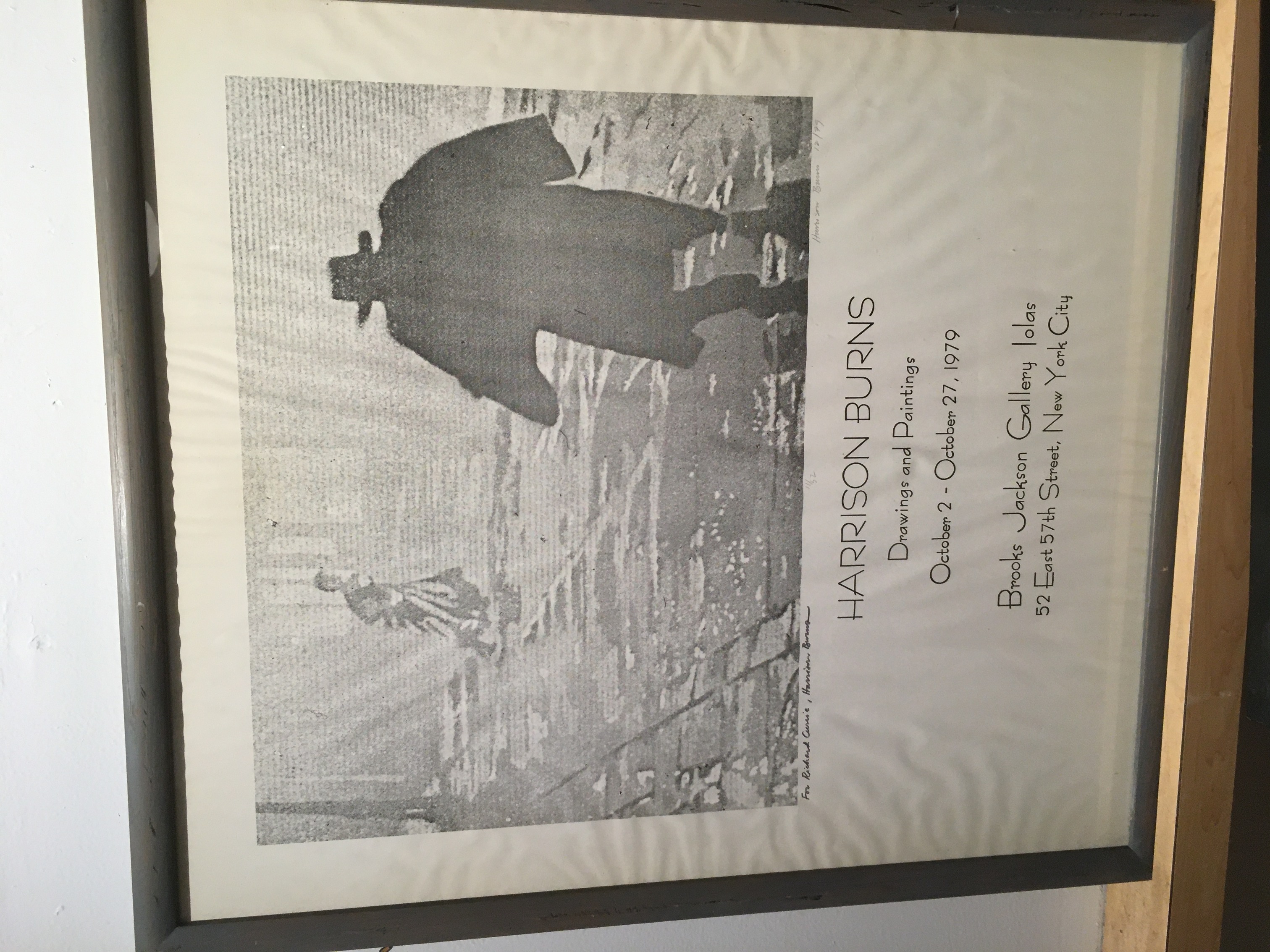
<p>A cloaked figure, moving menacingly on a foggy cobblestoned street, toward a woman in Victorian dress in the distance, turning to run, all in black and white, but fuzzy&mdash;as if the fog itself had bled into the image and rendering it into a greyscale of white noise. Further, the poster with this image had suffered some water damage, the surface visibly wrinkled, like ripples in a tide pool, even beneath its glass. Below this read:&nbsp;</p>
<p>HARRISON BURNS</p>
<p>Drawings and Paintings</p>
<p>October 2-October 27, 1979</p>
<p>Brooks Jackson Gallery Iolas</p>
<p>52 East 57<sup>th</sup> Street, New York City&nbsp;</p>
<p>It was an arresting image because I instantly recognized it, even in its altered state: it was a still from Alex DeToth&rsquo;s <em>House of Wax</em> (1953), the film that began Vincent Price&rsquo;s journey to horror icon. I&rsquo;d seen the film many times, once even in full 3D at Film Forum, but the still itself had a deeper resonance: it formed the endpapers of Denis Gifford&rsquo;s <em>A Pictorial History of the Horror Film</em> (1973), one of the most treasured and formative books from my childhood. My love of the genre began in some measure here, with countless hours spent gazing at evocative images from movies I wouldn&rsquo;t see until years later (and some I still haven&rsquo;t seen). One image, from an otherwise inept B movie,&nbsp; was so strangely disturbing to me I had to quickly turn past that page as I leafed through the book; other images fascinated by juxtaposition, as many of the smaller stills from wide variety of horror films were grouped by Gifford thematically on the pages, leading to odd, almost surreal collages that I can still picture in my mind. But that scene from<em> House of Wax</em>, its perfect composition of encroaching doom and flight, really lingered&mdash;when I finally saw the film not long after immersing myself in Gifford&rsquo;s compendium, I felt a distinct <em>frisson</em> as that scene, now in sickly green technicolor, came to life.</p>
<p>The poster sat there in its gray frame, speaking to me in its little whisper of a Proustian rush. Who was this Harrison Burns (such a great, resonant name for an artist), who had appropriated this image for his art?&nbsp;</p>
<p>I pulled out my phone and discovered that there are any number of Harrison Burns; adding the keyword artist produced a couple of auction images, a brief review from a 1990 issue of Artforum, and an obituary from the July 29, 1991 edition of the <em>New York Times</em>:</p>
<p class="css-at9mc1">&ldquo;Harrison Burns, a painter and teacher, died on July 14 at his summer home in Almunecar, Spain. He was 51 years old and lived in Manhattan.</p>
<p class="css-at9mc1">Mr. Burns died of a heart attack, said a friend, Michael Walls.</p>
<p class="css-at9mc1">Mr. Burns recently completed his 20th year as an art teacher at the Rutgers Preparatory School in Somerset, N.J., where he had served as chairman of the art department for several years.</p>
<p class="css-at9mc1">His art was based on still photographs that he made from television broadcasts and altered with stencils, collage and paint to give an impression of how one sees in an age of television. A resident of New York City since 1972, he began exhibiting here in 1977 and had his most recent show at the E. M. Donahue Gallery in SoHo in June 1990.&rdquo;</p>
<p>51. He was survived by his parents and siblings; I was now five years older than he when he died (a calculation I now do in my mind whenever I read about someone&rsquo;s death). And that was all. The brief description of his method explained the image before me, and the review in Artforum, two paragraphs in a round-up review of recent gallery shows, was positive:</p>
<p>&ldquo;Harrison Burns has succeeded in breathing fresh life into the tradition-bound genre of flower painting. While it was indeed possible to consider the examples shown here as simple still-life genre paintings, they are more than merely decorative. For all their electrifying colors and sensual good looks, these are intellectually rigorous pictures that bring together visuals and ideas in endlessly fascinating combinations &hellip; The paintings that resulted are characterized by a high-keyed opticality that transcends their ostensible subject matter.&rdquo;</p>
<p>A high-keyed opticality, sure. The outline of the mysterious stalker, Price in disguise, seemed to vibrate a little before me, shimmering in gaslight. I dove a little deeper, not finding much more: the paintings up for auction were earlier works, interesting collages of image and words, highly colorful. I also turned up the fact that Burns had a work in one group survey at MoMA, a show called &ldquo;Gold&rdquo; that ran between November 1978 and February 1979. Works by Warhol, Jasper Johns, Roy Lichtenstein, Louise Nevelson and others were in the show as well&hellip; Burns must have been thrilled to be in that show. Or maybe not, maybe he was disgruntled for some reason; nothing about Burns as a person, about who he was, his thoughts and ideas, turned up in this brief Google foray. It was obvious he had ideas about mass media and television&hellip; But what else? How much digging would one need to do to recover something about an obscure artist who died too young over thirty years ago? Someone somewhere surely remembered Harrison Burns. Some of his works had turned up in a couple of auction houses. He doubtless had friends and perhaps family still around (no mention of a wife; was he gay? 1991. Was &ldquo;heart attack&rdquo; code perhaps for the plague?).&nbsp;&nbsp;</p>
<p>The poster leaned against the wall like salvage from a shipwreck, but it was only the shipwreck of time, the one that deposits us all on our little desert islands to stare at distant horizon.</p>
<p>In <em>House of Wax</em>, Vincent Price plays a brilliant sculptor, Henry Jarrod, whose wax museum is full of tasteful historical tableaux; his grasping business partner, Matthew Burke (Frank Loveloy), wants Jarrod to turn it into a collection of gory, sensationalist crime scenes, like more successful wax museums are trading in. Jarrod finds such work distasteful, and offers to buy Burke out in three months&rsquo; time, but Burke needs cash now. It&rsquo;s the old dichotomy, art versus mammon, and when Jarrod rejects Burke&rsquo;s scheme to burn the museum and collect the insurance, Burke lights the figures anyway. A struggle ensues, and Jarrod is left beaten on the floor of his creation, his beauties melting all around him, while Burke escapes&hellip; only to be found dead, hanging inside an elevator shaft sometime later, as that mysterious, disfigured man (but not mysterious to the audience) begins his campaign of revenge.</p>
<p>All the best villains are those who have a true grievance; everyone has his reasons. Any artist ground in the gears of capitalism will have a twinge of sympathy, even schadenfreude, for Henry Jarrod&rsquo;s reign of aesthetic terror, even though Jarrod, his hands burnt beyond use for the delicate sculpting he once did, will now cover dead women in hot wax to create works of art. <em>Now I know how Joan of Arc felt&hellip; </em>Price perfectly conveys, with very little of the overacting that occasionally marred later performances, what it&rsquo;s like to have your ability to make the things that feed your soul taken away from you&hellip; and how that soul is now only fed on bitterness and death.</p>
<p>But most artists won&rsquo;t find themselves in such melodramatic circumstances. Rather, they find themselves in the mundane realm of failing powers, obscurity, and neglect. Everything tends toward oblivion; Hayden Carruth, in an essay about the poet and novelist Kenneth Fearing, described him as a good minor poet, and further said that&rsquo;s the best most can hope for&mdash;the only other options are &ldquo;the fluke of greatness&rdquo; and oblivion. Harrison Burns did not become a Famous Artist; was he happy to have sidestepped it? Was he all about the work itself, his teaching? Was he a mix of regret he didn&rsquo;t go farther and relief he didn&rsquo;t get sucked up into the dubious world of reputation, where everyone applauds you as you walk the tightrope and holds their breath, waiting for you to slip? Did he love <em>House of Wax</em>, or horror movies, or was this image simply one that stirred him amidst the tsunami of images that wash over us via screens? Does it matter? I saw a faded poster for a long ago gallery show in a thrift shop, and something stirred.</p>
<p>The poster wasn&rsquo;t priced. Usually, if something isn&rsquo;t priced at Housing Works, the employees can&rsquo;t sell it; it has to wait for the manager to look at it again and price it. Usually, when I stumble upon an unpriced item, I walk away. Usually. But this time I asked an employee about it, and they raised an eyebrow, puzzled. &ldquo;Huh,&rdquo; they said. &ldquo;I priced that just yesterday. I think it&rsquo;s ten dollars.&rdquo;</p>
<p>Ten dollars! Sold.</p>
<p>I walked out onto 17<sup>th</sup> Street, holding it awkwardly under one arm, wondering where I would hang it, or even if I would hang it. But for whatever reason, I couldn&rsquo;t let that moment and this object&mdash;this work of art&mdash;melt away into the flow of thrifting. There were too many echoes. An image, framed by the eye of Alex DeToth, shot by Bert Glennon and Peverell Marley, embedded in my brain by Denis Gifford, reshot and reconceived by Harrison Burns, waiting for me in my purposeful drifting through New York City, speaking&hellip; something. A mystery, not terribly mysterious, yet still a mystery (<em>House of Wax</em> was a remake of Michael Curtiz&rsquo;s 1933 <em>The Mystery of the Wax Museum</em>). I&rsquo;m tempted to call this mystery &ldquo;Harrison Burns,&rdquo; of which I still and perhaps always will know so little; I think it&rsquo;s more than that. I think it&rsquo;s the mystery of art itself: a private synecdoche in which some part of the world comes to stand in for some aspect of yourself. I think the art that means the most to us is this private kind, and it&rsquo;s always found when you&rsquo;re not looking for it. I don&rsquo;t know what this means to me, except perhaps to say:</p>
<p>Time is a house of wax, and we&rsquo;re all melting, no matter who sets the fire, or why.</p>
<p>&nbsp;</p>
<p>&nbsp;</p>
<p>&nbsp;</p>
<p>&nbsp;</p>
<p>&nbsp;</p><p></p>]]></content></entry><entry><title>My Life in Halloween Costumes</title><id>http://speakingpicture.com/journal/2022/10/28/my-life-in-halloween-costumes.html</id><link rel="alternate" type="text/html" href="http://speakingpicture.com/journal/2022/10/28/my-life-in-halloween-costumes.html"/><author><name>Speaking Picture</name></author><published>2022-10-28T16:56:10Z</published><updated>2022-10-28T16:56:10Z</updated><content type="html" xml:lang="en-US"><![CDATA[<p><span class="full-image-block ssNonEditable"><span><img style="width: 500px;" src="http://speakingpicture.com/storage/IMG_0634.JPG?__SQUARESPACE_CACHEVERSION=1666976380528" alt="" /></span></span></p>
<p>&nbsp;</p>
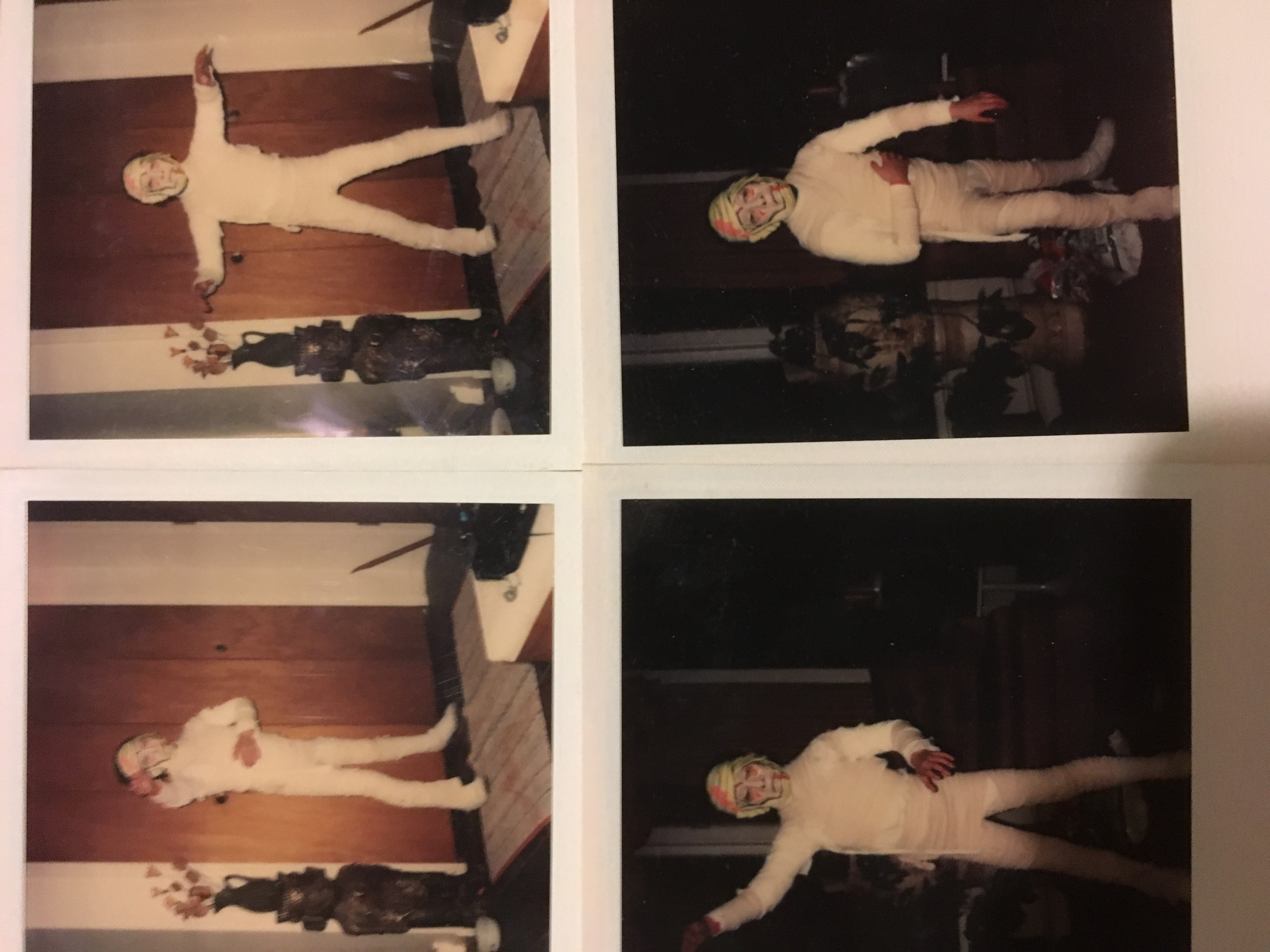
<p><strong>1970</strong>: My father dresses me as Kaiser Wilhelm II, last monarch of the Second German Reich. I have little say in this, as I am three at the time. This is an early example of Chekhov&rsquo;s famous dictum, &ldquo;If a German helmet from the First World War (you know, the one with the spike on top) is sitting in the basement in the first act, then it must inspire a Halloween costume by the third act.&rdquo; There&rsquo;s a picture, of course: a chubby Kewpie doll with painted-on moustache, struggling to keep his head upright under the weight of a war souvenir. At the very least, my expression resembles that of the Kaiser&rsquo;s when he found out he&rsquo;d lost the war.</p>
<p><strong>1973</strong>: I am Satan, on the theory that it is better to rule in Hell than serve in Heaven, though naturally I am unable to articulate this thought, as I am in the first grade. I am wearing a red tail, red horns and carrying the pitchfork. I am wearing a painted-on black moustache and goatee, which embarrasses me, as all makeup does, right through high school (thus sparing me from dressing up as Robert Smith). When I cavort in the elementary school parade, I am targeting souls for later acquisition, though my red tights droop in a manner unbecoming to the Prince of Darkness. I may, in truth, be the shortest Prince of Darkness on record, beating my personal best of being the shortest Kaiser Wilhelm on record.&nbsp;</p>
<p><strong>1974</strong>: I am the Mummy. Short of having my tongue cut out and being buried alive, I insist on Karloffian authenticity. I insist that my parents buy yards and yards of Ace bandages and literally wrap me up. My father, having previously produced an exact replica of the Kaiser&rsquo;s bristling mustache, is happy to comply. Though I make a concession to the store-bought aesthetics of the hoi polloi and wear a plastic Mummy mask, my replication of Karloff&rsquo;s shuffling walk (slower than a Romero zombie, faster than a&hellip; well, than an actual dead person) is incomparable. I am the Method hit of the second grade, and find that no one picks on me so long as I am utterly not myself (this lesson, and the names of the capitals of all 50 states, represents the apex of my early academic career).</p>
<p><strong>1975</strong>: When not beheading plastic German toy soldiers with a shovel (in order to create a headless Nazi zombie army), I imagine myself a soldier in &ldquo;The Good War,&rdquo; but without the ironic quotes. My father, who spent the Korean War in a radio room in a Paris, still has his old army jacket. Once swallowed by this great olive cloak all I need is my spike-less American helmet and a toy .45 automatic so realistic that thirty years hence I could easily commit suicide by cop with it. I am ready for patrol. No one thinks to mention that my Uncle Jim actually fought in the Battle of the Bulge until I am in my twenties. It is that sort of family; not the sort that doesn&rsquo;t talk about the war so much as the sort that doesn&rsquo;t talk about anything, except to look around the basement and wonder what&rsquo;s become of that German World War I helmet.</p>
<p><strong>1977</strong>: I am, bizarrely, wearing a werewolf mask and a yellow hooded rain slicker. It is some kind of prescient old school monster/demented slasher mash-up. I laugh as my friend&rsquo;selaborate robot costume falls apart after the fourth house, and then stand around silently while I wait for him to run home and change into a football outfit. When other kids walk by, I simply stare, in an equally prescient sunglasses-at-nigh-dead-drunk-but-still-standing mash-up.</p>
<p><strong>1982</strong>: I am too old for trick or treating, and resolve to play the vampire and scare the kids, my cape pulled over my face, cackling sluggishly in a thick Lugosi accent as I hold out a bowl of mini Snickers. But there are no kids. Urban myths about poisoned Halloween candy have destroyed the tradition of the trick, the treat. Not one case is ever documented in America of random poisonings of candy, though one father does try to kill his son for the insurance money by lacing a Pixy Stix with poison. I wait in vain all evening for trick or treaters, then throw away the candy in disgust, appalled at the waste of thirty dollars&rsquo; worth of arsenic.</p>
<p><strong>1984</strong>: I do not dress up in high school, except for a party at which I have my first and last romance with Jungle Juice. I am Sam Spade, a fedora one-size too big cocked on my head, my trench coat belted in classic Bogart-style. Of course, I fall in love with Pebbles, who, of course, only has eyes for Gilligan, thus following Chekhov&rsquo;s famous dictum that characters from popular culture are always in love with the wrong person.</p>
<p><strong>1986</strong>: I wear a suit and tie, walk around with a scythe, and hand out business cards that read G. REAPER <em>Don&rsquo;t Call Me, I&rsquo;ll Call You</em>. But I never call anyone, especially any girls, as I do not have their phone numbers.</p>
<p><strong>1987</strong>: My best friend throws one of those parties with a No Costume, Absolutely No Admittance policy. Thus, I put on a black pea coat, black wrap-around sunglasses, and black jeans, and go as the entire Velvet Underground. I am not admitted.</p>
<p><strong>1988</strong>: I dress up as Dean Stockwell&rsquo;s character Ben from <em>Blue Velvet</em>, and even wear makeup, but my rapidly thinning hair is cut very short and everyone thinks I&rsquo;m Pee Wee Herman; this is possibly as close to queerness as I will ever come.</p>
<p><strong>1993</strong>: I make good on a threat I&rsquo;d been making for years by going to a party as Groucho Marx. Much like the Mummy, I am a committed Marxist: painted-on moustache, cigar, Method. I stay completely in character for the entire evening. My date soon wears the pained expression of Margaret Dumont, even though she is dressed as a &ldquo;sexy pirate.&rdquo; This costume brings me full circle, as Julius Marx created his persona initially as a spoof on the ethnic stereotype of the German immigrant, many of whom wore spiked helmets and exclaimed &ldquo;Dumkoff!&rdquo; at any opportunity in post-war America.</p>
<p><strong>1994</strong>: I am Special Agent Dale Van Helsing of the Federal Bureau of Vampire Destruction (known to freedom-loving patriots everywhere as the FBVD). I wear a suit, flash my badge, wave a cross around. I am unable, however, to dispatch the film adaptation of <em>Interview With a Vampire</em>; this particular Halloween must thus be counted a failure.</p>
<p><strong>1995</strong>: I am a Shipwrecked Millionaire: naval jacket, captain&rsquo;s hat, ascot, cigarette holder and ice bucket of champagne, combined with shredded white pants and sandals. I am NOT Thurston Howell III, as I have given up Method, and cannot do a Jim Backus impression.&nbsp; Stop asking.<br /><br /><strong>1996</strong>: In my finest conceptual hour, I am a Ouija Board: a black jacket, with white vinyl letters and numbers placed on my back, and YES and NO running down each lapel. The planchette is worn over my heart; a black beret and skeleton gloves complete the ensemble. I return to Method by declaring that I will only communicate via writing on a notepad for the length of the party. Someone bets me I can&rsquo;t keep my mouth shut until midnight. I am forced to pay up at five minutes to twelve, after which dark forces flow through me and destroy everyone in the house in a frenzy of supernatural evil.</p>
<p><strong>1997</strong>: I am Hades, Lord of the Underworld: a double-breasted black suit, a tie with skulls on it, and a black laurel wreath around my freshly shaven head. Since Hades is both the god of the dead and of riches, I decide this subdued corporate look is appropriate; I finish it off with gaudy fake rings on every finger. I also hand out mock business cards (HADES, <em>Lord of the Underworld, Zero Styx Way</em>). I get a few numbers, and ascribe this to the faux bling.</p>
<p><strong>1998</strong>: My fianc&eacute;e and I dress as poems, in a quest to see how many times we are forced to explain our costumes in a single evening. I am Wallace Stevens&rsquo; Emperor of Ice Cream: the naval jacket from the Shipwrecked Millionaire recycled into a Duke of Edinburgh-look, complete with a crimson sash and a crown that features ice cream cones. My fianc&eacute;e is Sylvia Plath&rsquo;s Lady Lazarus, which entails looking like an accomplished corpse. Total number of explanations of our costumes: 53.&nbsp;</p>
<p><strong>1999</strong>: I plan to go as a Jackson Pollack, until the fumes from dripping all of that paint over a thrift store suit begin to make me lightheaded. I switch to becoming a Magritte: raincoat and bowler hat with a plastic green apple hanging in front of it on a wire. The apple bobs directly in front of my face; within five minutes my eyes are crossing. I find alcohol to be enormously effective with this glitch in the concept.</p>
<p><strong>2001</strong>: I am a Leonard Cohen song. It has been a very difficult year, and my famous blue raincoat is torn at the shoulder. Total number of explanations: 122.</p>
<p><strong>2002</strong>: While recovering from my divorice, I find a letterman&rsquo;s varsity jacket from my high school in a thrift store, and proceed to dress as the sort of person in high school whom I despised. I embrace Method once more, and offer tasty brews to bros all evening. I even sing along to the Beastie Boys, even though I'm the only member of Gen X that hates them (in large measure <em>because</em> the bro dudes love them). By the end of the party, I find it very difficult to shed this character, thus proving Nietzsche&rsquo;s dictum, <em>And if you gaze into the dude, the dude gazes into you</em>.</p>
<p><strong>2003</strong>: I note a resurgence of trick or treaters, but do not attempt to frighten them (at least not as long as their parents are waiting for them at the curb). I wonder when precisely I adopted the costume I&rsquo;ve been wearing every day outside of Halloween of late, the mask that hides and reveals, the persona that inhabits the mirror. I know I wore <em>something </em>that year;&nbsp;it's all a blank, now.&nbsp;&nbsp;</p>
<p><strong>2006</strong>: In grad school, I&rsquo;m invited to a costume party by someone I'm briefly dating; because I have long owned a fez (an even longer story), I decide to go as a Shriner. I am now a New Yorker, and I wear the fez all day around Midtown, and no one says anything at all about it. At the party, everyone gets the costume but gives me a look when I try to dun them for a donation to hospital burn units for children.</p>
<p><strong>2009</strong>: In a clearance rack, I stumble upon a black suit with orange pin-striping; with my glasses perched awkwardly on a domino mask, I attend a retro dance party as The Man Who is Heavily Into Halloween, a premonition perhaps of David S. Pumpkins. This remains the costume closest to me, an identity that lurks just under my skin at all times but only begins to itch in October. I don't know why this should be. Why do we love the things we love? To accept our mystery is a life's work; I am, as ever, my own... thing. <em>Any questions?&nbsp;</em></p>
<p><strong>2011</strong>: The time for costumes is drawing to a close, but I make good on another long term threat and dress up as The Shadow, even though it took weeks to find an approximation of a girasol ring. But a nor&rsquo;easter brings torrential rain the night of the party; my friend and I stay in, sitting around her Williamsburg loft, drinking, blissfully unaware, for a time, of the evil that lurks in the hearts of men.</p>
<p><strong>2019</strong>: For the first party invite in years, I resurrect the Van Helsing costume, but because I&rsquo;m carrying a large cross, everyone at the party thinks I&rsquo;m the priest from <em>The Exorcist</em>; the hour is very late in America, and I don&rsquo;t have the energy to correct them. My Brilliant Girlfriend, however, dresses up as a sexy photo of Anjelica Huston wearing a tank top, breeches and riding boots. She&rsquo;s stunning. No one gets it, but who cares?&nbsp;</p>
<p><strong>2020</strong>: I am simply a man wearing a mask.&nbsp;&nbsp;</p>]]></content></entry><entry><title>SAID NO ONE EVER</title><id>http://speakingpicture.com/journal/2020/9/22/said-no-one-ever.html</id><link rel="alternate" type="text/html" href="http://speakingpicture.com/journal/2020/9/22/said-no-one-ever.html"/><author><name>Speaking Picture</name></author><published>2020-09-22T15:18:38Z</published><updated>2020-09-22T15:18:38Z</updated><content type="html" xml:lang="en-US"><![CDATA[<p><span class="full-image-block ssNonEditable"><span><img style="width: 500px;" src="http://speakingpicture.com/storage/104209253_252255732669768_7332985979707003984_n.jpg?__SQUARESPACE_CACHEVERSION=1600788042097" alt="" /></span></span></p>
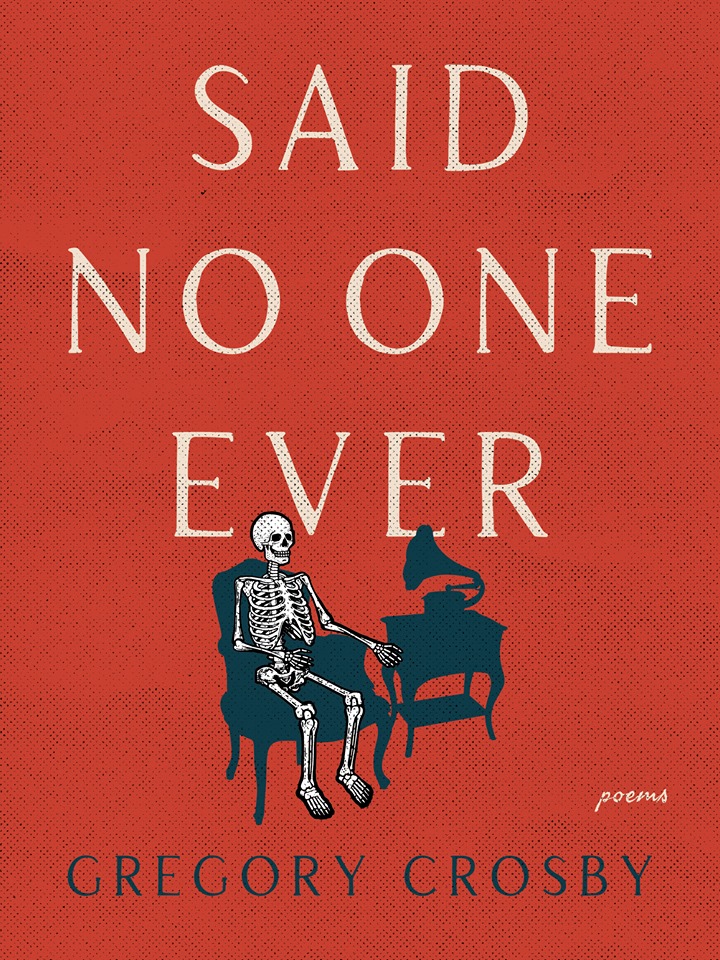
<p>My second book of poems, <em>Said No One Ever</em>, is <a href="https://brooklynartspress.com/portfolio/said-no-one-ever-by-gregory-crosby/">now availble for preorder</a> from Brooklyn Arts Press. The official publication date is February 2021, but pre-orders will be shipped before Xmas. I'm inordinately pleased with the cover design by Alban Fischer, and grateful for this bit of personal good news here in the ever-darkening Darkest Timeline.&nbsp;</p><p><br/><br/></p>]]></content></entry><entry><title>THE GHOST SHIP</title><id>http://speakingpicture.com/journal/2020/6/22/the-ghost-ship.html</id><link rel="alternate" type="text/html" href="http://speakingpicture.com/journal/2020/6/22/the-ghost-ship.html"/><author><name>Speaking Picture</name></author><published>2020-06-23T02:14:24Z</published><updated>2020-06-23T02:14:24Z</updated><content type="html" xml:lang="en-US"><![CDATA[<p><span class="full-image-block ssNonEditable"><span><img src="http://speakingpicture.com/storage/465-1.jpg?__SQUARESPACE_CACHEVERSION=1592879054012" alt="" /></span></span></p>
<p>Over the course of April, while under lockdown here in Sunset Park, Brooklyn during the COVID-19 pandemic, I wrote a thirty-part sonnet crown (also known as a "sonnet corona"; insert gallows laugh here), entitled <em>The Ghost Ship</em>. It now exists as a free, downloadable&nbsp;<a href="http://speakingpicture.com/storage/The Ghost Ship.pdf">chapbook</a>. It now feels, here in the depths of June, like a snapshot of a time both long past and ever present. I hope you read it; I hope it somehow speaks to you. Stay safe, stay strong.&nbsp;</p>]]></content></entry><entry><title>WALKING AWAY FROM EXPLOSIONS IN SLOW MOTION</title><id>http://speakingpicture.com/journal/2018/11/15/walking-away-from-explosions-in-slow-motion.html</id><link rel="alternate" type="text/html" href="http://speakingpicture.com/journal/2018/11/15/walking-away-from-explosions-in-slow-motion.html"/><author><name>Speaking Picture</name></author><published>2018-11-15T19:27:34Z</published><updated>2018-11-15T19:27:34Z</updated><content type="html" xml:lang="en-US"><![CDATA[<p><span class="full-image-block ssNonEditable"><span><img style="width: 600px;" src="http://speakingpicture.com/storage/wafesm_front_red3.jpg?__SQUARESPACE_CACHEVERSION=1542310640225" alt="" /></span></span><br /><span class="full-image-block ssNonEditable"><span><img src="https://squareup.com/market/the-operating-system/item/walking-away-from-explosions-in-slow-motion-gregory-crosby?__SQUARESPACE_CACHEVERSION=1542310395258" alt="" /></span></span></p>
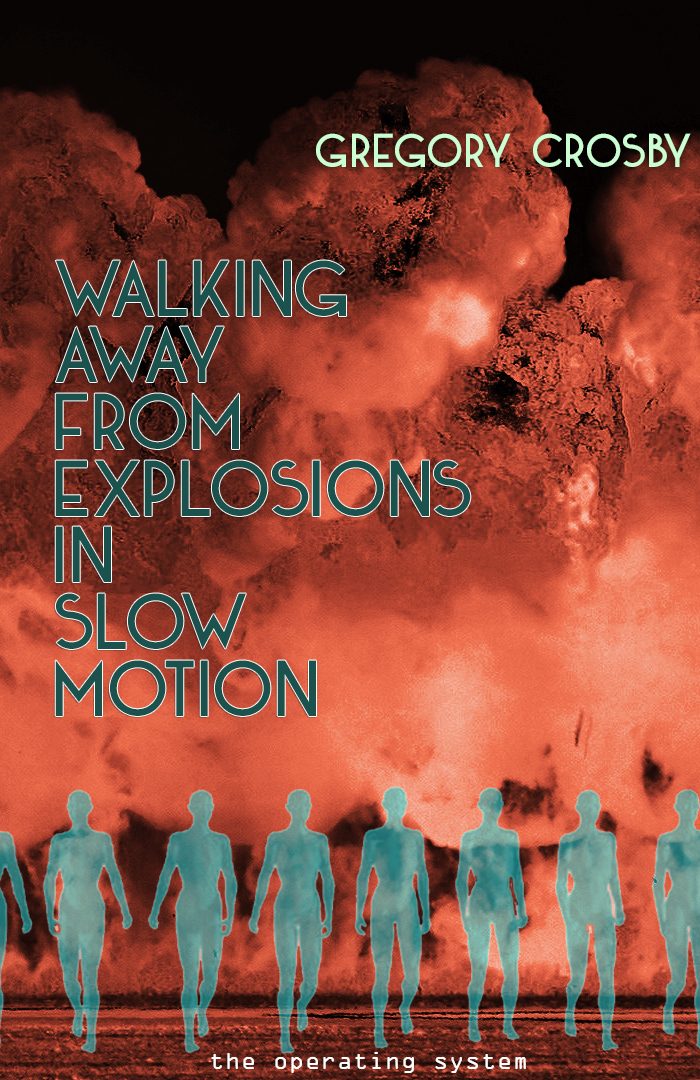
<p>My first full-length poetry collection, <em><a href="https://squareup.com/market/the-operating-system/item/walking-away-from-explosions-in-slow-motion-gregory-crosby">Walking Away from Explosions in Slow Motion</a></em>, is now available from Brooklyn-based small press The Operating System. You can order a copy <a href="https://www.barnesandnoble.com/w/walking-away-from-explosions-in-slow-motion-gregory-crosby/1129645254?ean=9781946031334">here</a>.</p>
<p>It took a very long time for my first book to appear; longer than I imagined it would. But then, nothing is ever as you picture it, is it?&nbsp;</p><p><br/></p>]]></content></entry><entry><title>THE BOOK OF THIRTEEN</title><id>http://speakingpicture.com/journal/2017/3/11/the-book-of-thirteen.html</id><link rel="alternate" type="text/html" href="http://speakingpicture.com/journal/2017/3/11/the-book-of-thirteen.html"/><author><name>Speaking Picture</name></author><published>2017-03-11T19:40:37Z</published><updated>2017-03-11T19:40:37Z</updated><content type="html" xml:lang="en-US"><![CDATA[<p><span class="full-image-block ssNonEditable"><span><img style="width: 500px;" src="http://speakingpicture.com/storage/image1.JPG?__SQUARESPACE_CACHEVERSION=1489262392792" alt="" /></span></span></p>
<p>&nbsp;</p>
<p>My chapbook of thirteen word horror stories, <em>The Book of Thirteen</em>, with illustrations by Ted Chevalier, is now available from Yes Poetry Press.&nbsp;</p>
<p>You may order a copy <a href="http://www.yespoetry.com/bookstore/the-book-of-thirteen">directly from the publisher</a>... <em>if you dare.&nbsp;</em></p><p><br/><br/><br/><br/><br/><br/><br/><br/><br/><br/><br/><br/><br/><br/></p>]]></content></entry><entry><title>LET'S REVIEW, SHALL WE?</title><id>http://speakingpicture.com/journal/2015/1/23/lets-review-shall-we.html</id><link rel="alternate" type="text/html" href="http://speakingpicture.com/journal/2015/1/23/lets-review-shall-we.html"/><author><name>Speaking Picture</name></author><published>2015-01-23T16:34:26Z</published><updated>2015-01-23T16:34:26Z</updated><content type="html" xml:lang="en-US"><![CDATA[<p><span class="full-image-block ssNonEditable"><span><img style="width: 500px;" src="http://speakingpicture.com/storage/accept paradox.jpg?__SQUARESPACE_CACHEVERSION=1422031043724" alt="" /></span></span></p>
<p>Wither Speaking Picture? It seems no one bothers to visit blogs anymore; no one can be bothered to click over from whatever social media platform they're currently scrolling through. So I've decided to swing with a subscription model for my varied writing, Reports from the Phantastikon, a&nbsp;weekly bulletin (sent out every Wednesday) of poems in prose and verse, flash fictions, reviews, critical commentary, aphorisms, feuilletons, satires, cri de coeurs, crackpot ideas, and strange stories that may or may not be dreams within dreams, all of which will wing their way into your email inbox, where you can ignore them at your peril, since Tiny Letter shows me exaclty who opens the emails (mwahahaha). But if you like this sort of thing, and look forward to writings sent directly to you for your perusal, you can sign up&nbsp;<a href="http://www.tinyletter.com/gregorycrosby">right here</a>.&nbsp;</p>
<p>If you scroll down to the next entry, you'll see it was posted in February 2010. Does this mean Speaking Picture has been fallow these past five years, yet another abandoned website in the digital haze? Not exactly. For four Aprils in a row (2011-2014), I did the NaPoWriMo challenge, writing a poem a day and posting it here with an accompanying image. All those poems have since been revised; the earlier drafts that lived here on the site have been taken down so they can appear elsewhere, in literary journals or a book or on the backs of the stained and crumpled envelopes that will doubtless be found in the pockets of my unclaimed corpse (haha, I kid... I would never write on the back of a <em>stained</em> envelope). Hence the gap. Whether 2015 brings another round of NaPoWriMo still remains to be seen.&nbsp;</p>
<p>Speaking of publications, The Operating System published a chapbook of my poems in April of 2014, <em>Spooky Action at a Distance.</em> It's available from the publisher <a href="https://squareup.com/market/the-operating-system/spooky-action-at-a-distance">here</a>.</p>
<p>I'm slightly stunned to realize that I published more poems in 2014 than in any previous year. In addition to poems that appeared in the print journals Strangelet, Stoneboat, Noctua Review and Flush'd, there were all these that appeared online:</p>
<p>Really System published <a href="http://reallysystem.org/issues/one/satan%27s_skull_glows_white_hot/">"Satan's Skull Glows White Hot."</a></p>
<p>The Lake published <a href="http://www.thelakepoetry.co.uk/poetry-archive/february/">"The Hive."</a></p>
<p>Cider Press Review published <a href="http://ciderpressreview.com/cpr-volume-16-2/and-the-lamb-but-only-much-later/#.VMKD31WJOuY">"And the Lamb, But Only Much Later."</a></p>
<p>The Leopard Seal published <a href="http://poetry.theleopardseal.org/post/75982618969/rungs">"Rungs."</a></p>
<p>Ithaca Lit published <a href="http://ithacalit.com/gregory-crosby.html#.VMJ8jVWJOuY">"Ode to the Flux Capacitor" and "H."</a></p>
<p>The Thing Itself published <a href="http://ttijournal.org/2014/06/dream-by-fire-by-gregory-crosby/">"Dream by Fire,"</a> <a href="http://ttijournal.org/2014/06/edo-ode-by-gregory-crosby/">"Edo Ode,"</a>&nbsp;and <a href="http://ttijournal.org/2014/06/the-jules-bug-by-gregory-crosby/">"The Jules Bug."</a></p>
<p>Other Rooms published <a href="http://otherroomspress.blogspot.com/2014/05/gregory-crosby-your-hands-must-be-held.html">"Your Hands Must Be Held in a Natural Position,"</a>&nbsp;<a href="http://otherroomspress.blogspot.com/2014/05/gregory-crosby-mtv-theory.html">"MTV-theory,"</a> and <a href="http://otherroomspress.blogspot.com/2014/05/gregory-crosby-parable-analogy-search.html">"Parable &amp; Analogy Search the Bedroom for Their Clothes."</a></p>
<p>Ricochet Magazine published <a href="https://ricochetmag.wordpress.com/2014/05/19/ricochet-magazine-may-edition/">"Fast Song" and "Disaster Song."</a></p>
<p>Fruita Pulp published <a href="http://www.fruitapulp.com/2014/06/30/two-poems-by-gregory-crosby/">"Unfinished" and "Waiting for the Great Pumpkin."</a></p>
<p>The Dos Passos Review published <a href="http://thedospassosreview.com/my-fathers-ghost/">"My Father's Ghost."</a></p>
<p>Cartagena Review published <a href="http://cartagenajournal.com/2014/08/10/summer2014-crosby/">"And Starring Lee Harvey Oswald as the 13th Doctor."</a></p>
<p>The Squawk Back published <a href="http://www.thesquawkback.com/2014/07/marketrate.html">"Market Rate" and "Siri, Where are the Snows of Yesteryear?"</a></p>
<p>Behemoth Review published <a href="http://behemothreview.com/post/96520574260/comes-autumn-with-her-serenade">"Comes Autumn With Her Serenade."</a></p>
<p>Killer Whale Journal published <a href="http://www.scribd.com/doc/245376109/Killer-Whale-Journal-Vol-2">"Category Three."</a></p>
<p>Josephine Quarterly published <a href="http://www.josephinequarterly.com/fallwinter-2014.html">"Runaway Tire Checks into Hotel Conference Room."</a></p>
<p>And now I believe we're all up to date. Watch this space for... well, who knows. &nbsp;</p>]]></content></entry><entry><title>WINTERREISE</title><id>http://speakingpicture.com/journal/2010/2/12/winterreise.html</id><link rel="alternate" type="text/html" href="http://speakingpicture.com/journal/2010/2/12/winterreise.html"/><author><name>Speaking Picture</name></author><published>2010-02-12T20:45:40Z</published><updated>2010-02-12T20:45:40Z</updated><content type="html" xml:lang="en-US"><![CDATA[<p><span class="full-image-block ssNonEditable"><span><img src="http://speakingpicture.com/storage/bell tower.jpg?__SQUARESPACE_CACHEVERSION=1266007591244" alt="" /></span></span></p>
<p>&nbsp;</p>
<p>As much as he had enjoyed the notion spending the whole day inside, Cross knew by that afternoon that he couldn&rsquo;t let the snowstorm pass without going out into it. The next day would dawn beautifully, a world of white gleaming in sunlight, and then would almost instantly turn into an urban gray slush that clutched at ankles like the icy grip of the damned.&nbsp; Besides, now that he was ensconced in semi-suburban Riverdale, the snowy city would be lovelier than usual, so out he went.&nbsp;</p>
<p>Walking down the path, Cross nearly ran smack into a pine bough that usually wasn&rsquo;t there; it dipped down under the snow&rsquo;s weight, a curtain of dark green and white that he ducked under with the momentary sensation of one of the winter forests of his childhood. More than a foot of snow had fallen, and was still coming down in big wet flakes, their celebrated individuality obliterated the moment they came into contact with the world. Cross trudged up to the parkway, toward the lattice of frosted branches, white on black, that covered the horizon, broken here and there by one of the 1950s era apartment towers that seemed so incongruous amidst the small houses and large stone mansions that dotted the neighborhood.&nbsp;</p>
<p>Cross was still slightly stunned that Brooklyn had given way so easily to the Bronx, but more and more he gave himself over to flux, change itself the only change anyone could believe in. Even as the future assumed a pleasing shape (much like the Devil, who also lurked, per the clich&eacute;, in all the details of that future), Cross felt content to live day by day. He was, after all, taking at least one day back for every day that he had lost over the course of twenty months.</p>
<p>(He had almost thought <em>stolen</em> before mentally crossing it out and thinking <em>lost</em>, for he had been complicit in those days, those moments, all trailing behind like a wake now). By May he would have all of them back.</p>
<p>He stopped and stepped aside, out of his thoughts and into the snowbank, to let a woman on skis pass; she was smiling, out of breath. Beyond her a man pushed a snowplow, and another appeared suddenly with a shovel over his shoulder. Cross silently thanked them for making his walk possible; his snow boots had been one of the casualties of the move back uptown. As the woman passed, her legs and arms scissoring, Cross remembered Winter Camp, and his utter inability to cross-country ski. His skiing was so maladroit that soon he was far, far behind the rest of the campers. He vividly remembered looking up from his shuffling, scuffling labors and being alone on the trail, and feeling simultaneously frustrated with his complete lack of athletic ability and secretly pleased at the solitude it suddenly afforded, his snowsuit suddenly as bulky as an spacesuit, the winter white flecked with black like a negative of the starry void.&nbsp;</p>
<p>It was cold. Cross walked down to the Bell Tower, crossing over the Parkway and making his way down Riverdale Drive. He thought for a moment of walking to Ewan Park and watching what would doubtless be a whole fleet of sleds careening down the park&rsquo;s steep slope, but knew he would only get as far as Salvatore&rsquo;s and a cup of hot chocolate.&nbsp;</p>
<p>In the drifting snow, the Bell Tower, its sides inscribed with the names of war dead forgotten along with those who mourned them, stood like a lovely old ruin of some kind. It stood on a traffic island and spent its hours, day and night, as a sort of stark Maypole for traffic; Cross&rsquo; bus swung by it daily. It was a landmark, but the sort of landmark that everyone used for navigation. Cross doubted many every really saw it, except at the holidays when a forlorn Christmas tree and neon menorah stood at the foot of it. It put Cross in mind of the Beaumont Tower on the campus of Michigan State.&nbsp;</p>
<p>Cross stood still for a moment, letting the snow alight. So much of winter was tied up in childhood now&mdash;snow, he had come to realize, represented the lost world of his childhood and his parents, and beyond that his grandparents, great-grandparents, people for whom the Mojave Desert would have been as exotic as the Sahara. It represented not only Michigan but New York, the upstate world of Syracuse and Port Byron where distant relatives perhaps still lived. And enough snow to cover them all, thought Cross to himself.</p>
<p>Outside of Salvatore&rsquo;s, a young boy, bundled but not too bundled, was methodically packing a snowball in his fists; Cross felt his own palms tingle at the memory of doing the same, and he remembered, too, Bill Cosby&rsquo;s snowball routine on <em>Revenge</em>, an album that Cross had listened to on many a snow day as a child, to the point where he could likely still recite the whole routine himself. As Cross made his way across Riverdale Avenue, he half hoped his hat would provide a target, but the boy, having shaped the snowball to his apparent satisfaction, suddenly let it crumble, dropping it to the salted sidewalk. <em>And my mother had thrown the snowball away&hellip;&nbsp;</em></p>
<p>Cross&rsquo; father had been one of the counselors that year at Winter Camp. Each counselor was assigned a half dozen campers and a cabin, and the fact that Cross had escaped being assigned to his father&rsquo;s cabin was almost proof of a higher power. Later, he discovered that all the boys in his father&rsquo;s cabin thought his dad was great: he had led them on a raid of the cafeteria after hours to steal extra rice crispy treats, and told them endless ghost stories after lights out. Cross had great difficulty reconciling this fun character with his irritable and irritated father and wondered if not getting assigned to that cabin had been such a blessing after all.&nbsp;</p>
<p>As Cross settled into the warmth of Salvatore&rsquo;s, the red-checked tablecloths somehow adding to that warmth, he also remembered his father putting him on a child&rsquo;s snowmobile (it seems they had such things in 1970s Michigan) at the age of six, and how it had shot off across an icy parking lot the moment the ignition had been turned. He remembered his father laughing as he cried, and why not? No harm done. But after that he had ridden solely on the back when his parents had taken their snowmobiles out, their roar cutting though those winter landscapes, turning them into extraordinarily loud silent movies. He remembered, too, walking out on the ice on Blue Lake, and his foot going through an iced over ice fishing hole, his leg plunging into the chilled black water all the way up to his thigh, and his father&rsquo;s arms under his own, pulling him out. What if the ice around that hole had suddenly cracked, Cross thought, looking out the window as the snowplow came by, pushing all this winter wonderland ahead of it like so much trash.</p>
<p>It occurred to Cross that living in seasons again, these last few years, had strangely heightened that feeling of living in the moment: the season had become the place to locate that moment in. Summer moments, winter moments, autumn moments. The years in the desert now felt weirdly outside of time, though the subtle seasons there, too, affixed the days. Cross knew it was raining in Vegas even as the snow was falling over New York, and he knew the smell of the desert after it rained, that pleasurable mixture of sage and mustiness, held fast any number of memories. He suddenly saw his father&rsquo;s face as he stood in the driveway of the ranch, the setting sun making him squint.&nbsp;</p>
<p>Cross saw, too, that those memories were crowded with many faces. Winter, however, and winter dreams, were solitudes, even when others were there&mdash;amidst the snow, you felt as if you were the only person in the world. It focused the mind somehow, the snowy landscape, and not because of that trope about how the freshly fallen snow was so clean, how it had somehow cleansed the world&mdash;the dirty old world was right there underneath it, waiting for the sun&mdash;but because it had transformed the world into an intimation of silence. Even the shovelers and snowblowers and snowplows perhaps sensed this, and their resentment at having to clear the world had less to do with toil and more to do with a fear of that silence. And it wasn&rsquo;t that such silence was some intimation of death, of oblivion (though it could be, and perhaps was feared to be) but of eternity: the silence of being outside of time, of perpetual waiting for something that had already happened.&nbsp;</p>
<p>Which actually, come to think of it, was a pretty good definition of death. Life, however, was hot chocolate. Cross took a sip, and then another, sitting alone at a table by the window, watching the snow drift down as the sky darkened.</p>
<p>&nbsp;</p><p></p>]]></content></entry><entry><title>THAT JOKE ISN'T FUNNY ANYMORE</title><id>http://speakingpicture.com/journal/2009/6/4/that-joke-isnt-funny-anymore.html</id><link rel="alternate" type="text/html" href="http://speakingpicture.com/journal/2009/6/4/that-joke-isnt-funny-anymore.html"/><author><name>Speaking Picture</name></author><published>2009-06-04T04:33:46Z</published><updated>2009-06-04T04:33:46Z</updated><content type="html" xml:lang="en-US"><![CDATA[<p>&nbsp;</p>
<p><span class="full-image-block ssNonEditable"><span><img style="width: 400px;" src="http://speakingpicture.com/storage/imperial.jpg?__SQUARESPACE_CACHEVERSION=1244090192381" alt="" /></span></span></p>
<p>&mdash;I fear that old line about Vegas has finally seeped into this event, said Jack as he popped another piece of Nicorette gum in his mouth.</p>
<p>&mdash;What&rsquo;s that? asked Ray as he watched a desultory parade of what passed for hipsters wend its way past them.</p>
<p>&mdash;Las Vegas is the only place where you can have a good time without actually enjoying yourself, said Jack. He smiled without mirth, his eyes doubtless rimmed in red behind his smoky-dark prescription sunglasses.</p>
<p>&mdash;Attributed to Jack Carter, I believe, said Ray.</p>
<p>&shy;&mdash;Well, it&rsquo;s Jack Samson&rsquo;s now, replied Jack with a smack.</p>
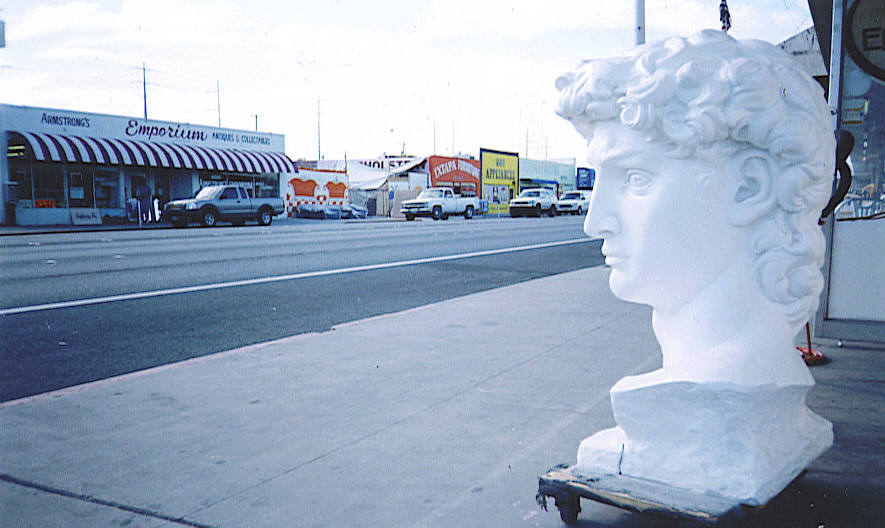
<p>They were standing on the corner, just down the block from the Sugar Shack antique store. The sun was going down, and the light glinted off Jack&rsquo;s glasses while Ray shielded his eyes and looked up the street. It was the monthly gallery crawl, which more or less functioned as the monthly see and be seen, drink free wine while ignoring the art, wander in and out of the bars, get drunk by the time the bands go on, wake with a hangover crawl as well. Vendors had set up booths of various kinds up and down the streets, but the scattered clots of crawlers didn&rsquo;t stop at most of them long enough to register whatever (beaded purses, scrap-metal sculptures, self-published thrillers) was for sale. In other words, not much had changed since the last time Ray had been in town, except for new names on the galleries, new studios in place of those who&rsquo;d given up the art ghost and moved on, new bands reconfigured from old ones, now playing in the same dozen bars (only the DJs seemed eternal).</p>
<p>Still, Ray felt obliged to check in whenever he was here, if for no other reason than to say hello to old friends (well, old acquaintances, mostly). Jack, who by now had nothing but scorn for the &lsquo;farts district,&rsquo; would only indulge him for so long before pulling him away for drinks at the Chimera (the only bar downtown that steadfastly refused both video poker and live music, thus endearing it to Jack, who reviewed concerts for a living and didn&rsquo;t need, as he put it, to watch shitheads stumble around four chords on his nights off). Then again, Jack still lived here. Ray was just a visitor these days.</p>
<p>&mdash;Can you believe somebody put hours and hours of their time into that?</p>
<p>Ray knew it was a rhetorical question, but he turned to look anyway and followed Jack&rsquo;s gaze through the windows of a little storefront gallery where huge abstract canvases slathered in paint simultaneously drew the eye in and spit it out. Jack shook his head.</p>
<p>&mdash;At least a mediocre guitar player in a bar band might get laid for his troubles, said Jack.</p>
<p>&mdash;You&rsquo;d be surprised how easily painters get laid, said Ray.</p>
<p>&mdash;That&rsquo;s only because you used to sleep with one.</p>
<p>&mdash;True, said Ray. But it wasn&rsquo;t exactly easy.</p>
<p>Jack looked up the avenue, where the galleries were mixed with Mexican furniture stores; a giant, plaster head of David sat out on the sidewalk, glancing back at Ray and Jack with a what looked like a look of desperate, befuddled hope and dawning resignation.</p>
<p>&mdash;Is that replica of David still inside Caesars? asked Ray.</p>
<p>&mdash;Christ, who knows. I haven&rsquo;t been inside that part of Caesars in years. I wouldn&rsquo;t even have been in the Forum addition yet if I hadn&rsquo;t been lingerie shopping for Delia.</p>
<p>&mdash;One more round, Delia&rsquo;s gone, one more round, sang Ray in a low voice.</p>
<p>&mdash;She&rsquo;ll be back, said Jack with a shrug. And wearing the lingerie, too.</p>
<p>Ray very much doubted that Delia would be back, but if she did reappear in Jack&rsquo;s life it was likely to be without a dime and on the run from somebody; she likely wouldn&rsquo;t have anything left but the fancy lingerie. But that was Jack&rsquo;s way of keeping himself intact&mdash;he dated crazy and used crazy as an excuse not to get too close. That much hadn&rsquo;t changed.</p>
<p>&mdash;Listen, said Ray, we should just go over to the Bomb and see what Nadia has up on the walls and then we can go hit the Chimera.</p>
<p>&mdash;Ah, said Jack with a smile, I forgot to tell you: the Bomb is gone.</p>
<p>&mdash;What? Really? How is that possible? When did it close?</p>
<p>&mdash;Oh, it didn&rsquo;t close&mdash;just moved. Nadia moved it to LA. Said the market had gone from soft to melted here. Jack jerked his thumb at a crowd of teenagers making noise in front of one of the booths. Can you blame her? Look at who shows up now&mdash;the same, tired, hundred art mavens and a ton of broke-ass kids who just want to have something to do.</p>
<p>&shy;&mdash;Well, sure, said Ray. If this had existed when we were in high school, we would have been hanging out here. But Jack wasn&rsquo;t listening; he&rsquo;d launched into an air guitar version of &ldquo;I Just Want to Have Something to Do,&rdquo; his arms slung low like Dee Dee Ramone as he fingered imaginary bass frets.</p>
<p>&mdash;Toooo night... to-oo-night... well, all riiiiiiiiiiiiight....</p>
<p>&mdash;Hey, Ray! called a voice. In the setting sun, a t-shirted mass approached. Ray looked up into the bug eyes of The Mann. Inevitably, he saw The Mann whenever he was in town; inevitably, the conversation went like this:</p>
<p>&shy;&mdash;How&rsquo;s tricks, Ray?</p>
<p>&mdash;Well, you know, I gotta get a bigger hat.</p>
<p>&shy;&mdash;Hah! Again? But that trick never works! Hah!</p>
<p>&shy;&shy;&mdash;That joke isn&rsquo;t funny anymore, sang Jack under his breath.</p>
<p>&shy;&mdash;You still with the station, Mann?</p>
<p>&shy;&mdash;You know it, somebody has to teach the children about rock n&rsquo; roll. Hey, I want you to meet someone. Someone stepped out of the bulk that was Nicholas Mann; a tiny woman about their age, with a black pixie cut and trendy glasses.</p>
<p>&mdash;This is Angelica, my girl, said Mann. You won&rsquo;t believe this, but she went to Western same time as me, and we didn&rsquo;t know each other at all&mdash;not at all! And then we met here!</p>
<p>&mdash;Here? said Jack. On the corner? I thought the girls worked farther east.</p>
<p>&mdash;Hah hah! Hey, this is Ray Sands, the magician.</p>
<p>Angelica gave out a little squeal. &mdash;I used to take my kids to that afternoon show you had, years and years ago!</p>
<p>Ray smiled and assumed the face he was long used to assuming, but Jack gave a short little laugh. &mdash;That was almost twenty years ago. Pop out a couple with your high school sweetheart, did you?</p>
<p>&mdash;Hah! Angie, this is Jack Samson.</p>
<p>&mdash;No way! Of Samson&rsquo;s Army?</p>
<p>Jack winced a little. &mdash;No, no. Different Samson. Completely different Samson.</p>
<p>&mdash;I loved Samson&rsquo;s Army! burbled Angelica. I&rsquo;m older than I look, hah?</p>
<p>&mdash;You look perfect to me! said Mann, giving her a squeeze. Jack used to be a DJ with me, back in the day.</p>
<p>&mdash;I was never &lsquo;with&rsquo; you, Mann, said Jack. I only orbited you. Whenever I got to the far side, I played a few records before gravity shot me back around.</p>
<p>Mann laughed in the way of someone so used to being big it barely registers. But Ray remembered Mann at nineteen, crying over an empty bottle of vodka at a party, his thick legs somehow stuffed through the bars of an apartment balcony, after a good half-hour of jokes at his expense. Mann didn&rsquo;t lose his virginity until years later, when his impeccable geek credentials at long last outweighed his literal weight during the improbable rise of geek chic in the 1990s. Mann found his groove and had worked it, Ray thought to himself, into a nice, deep, comfortable trench from which he could laugh off anything.</p>
<p>&shy;&mdash;Hey, you guys should come to the show, said Mann, completing the encounter in the only way an encounter with him could end, with a flier in your hand. These guys are from Portland, and they&rsquo;re really awesome, like Yo La Tengo meets Animal Collective.</p>
<p>&mdash;Sorry, Mann, said Jack, but we&rsquo;re going to have a really awesome evening where bourbon meets my tongue.</p>
<p>They exchanged good-byes, nice to meet you&rsquo;s, nothing up my sleeve, prestos. As they disappeared into the milling crowd, Jack cackled.</p>
<p>&mdash;There goes a Mann, he said. How does he manage to push forty and still be like that?</p>
<p>&shy;&mdash;He&rsquo;s happy, said Ray, simply, staring after Mann&rsquo;s bulk, his girlfriend like a toy poodle under his arm. Jack snorted.</p>
<p>&mdash;Everything changes, nothing changes. Two steps forward, five steps back. All these artsy bars and attempts at galleries, and the Shangri-La Telegraph Office is still an empty lot, a bulldozed fucking lot. And Mann&rsquo;s happy as a big, loud, clueless clam.</p>
<p>Ray smiled without looking at Jack. &mdash;And you&rsquo;re still here, he said.</p>
<p>Jack didn&rsquo;t look at him either. &mdash;And you still keep coming back, even though you&rsquo;ll never work this town again.</p>
<p>&mdash;Well, said Ray, as he turned and began walking down the sidewalk, toward David&rsquo;s empty, bewildered eyes (bewildered at their emptiness? Or empty because bewildered?) You can only disappear so many times.</p>
<p>&shy;&mdash;Or just the once, said Jack, spitting out his gum.</p>
<p>&nbsp;</p>]]></content></entry><entry><title>THROUGH A MASK</title><id>http://speakingpicture.com/journal/2009/4/18/through-a-mask.html</id><link rel="alternate" type="text/html" href="http://speakingpicture.com/journal/2009/4/18/through-a-mask.html"/><author><name>Speaking Picture</name></author><published>2009-04-18T23:44:37Z</published><updated>2009-04-18T23:44:37Z</updated><content type="html" xml:lang="en-US"><![CDATA[<p>&nbsp;</p>
<p><span class="full-image-block ssNonEditable"><span><img style="width: 300px;" src="http://speakingpicture.com/storage/vendetta.jpg?__SQUARESPACE_CACHEVERSION=1240100046823" alt="" /></span></span></p>
<p>Cross wondered, often, if his heart was black because it was charred or black because the poison had done its slow, relentless work. He didn't like to think it was only black from all the ink, but in the moments of honesty that piled up, week to week, like newspapers on the porch of a haunted house, he had to admit the possibility.</p>
<p>Why was he so reluctant, so resistant? Because that would mean it was all still a state of being mediated by words and nothing more, Cross replied to the mirror that refused to show him anything but his own reflection. Cross didn't want to feel literary (isn't that why nothing would come of late, no work, no matter how insistent its tapping at his--ah, can't resist--chamber door?). But Cross didn't want to feel literal, either: as if something really had been altered, fundamentally, and wasn't just a hostage to the time that healed all wounds... except the wound made by time itself.</p>
<p>Cross kicked himself now and then, like Dr. Johnson kicking that stone, and refuted his own sense of abstraction. He didn't want to only be alive in words, but he didn't want to be dead to them... Thinking of Johnson made him think of Beckett, of course. Language was indeed a veil, and he was tired of veils, tired of the perfect logic and reasonableness of veils, the Grand Unified Theory that was a veil upon a veil upon a veil...</p>
<p><em>One must speak through a mask, through a persona</em>. Was that Yeats? Cross could have looked it up, typing the words into the magic window that seemed to bring all of existence to him while simultaneously holding it at bay. Instead, Cross looked out again through the mundane window, the one that gathered darkening blue in the still bare branches of the tree outside, and the sounds of cars hissing by the reservoir that was now too black to admit any light. Language seems a poor revenge, thought Cross, but he'd had that thought before. Thousands had that thought before; hadn't done them a bit of good either.</p>
<p>Cross looked at the scattered thoughts in his notebook, trying to move forward while something within (surely not his heart, whatever it's real color) just as insistently held him back. <em>Seriousness is often mistaken for pretentiousness, the way you mistake the face of a distant figure for a mask when it is indeed their face, their only face</em>. Cross looked out the window again, and sat still for a while. He had only to switch on the light to see his own face, strange and comforting, peering back at him from the oncoming night.</p>]]></content></entry></feed>